Tuesday, December 22, 2015

Public hearing begins into Sago mine disaster - adds s''bite AP Archive , Davitt McAteer

www.DavittMcAteer.com
Published on Jul 28, 2015
Buckhannon, West Virginia - 2 May 2006
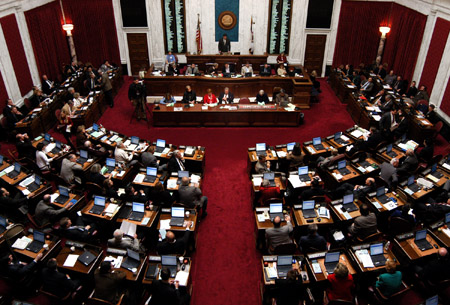
1. Wide shot of hearing
2. Various of family members at hearing
3. SOUNDBITE: (English) Pam Campbell, Sister-in-Law of miner Marty Bennett
"Today, not only do I speak for my sister and my nephew and my entire family, I''m going to take it upon myself to also speak for the rest of these families. We expect to get answers to these questions and so far, these answers have not come."
4. Cutaway of families applauding
5. SOUNDBITE: (English) John Groves, Brother of miner Jerry Groves
"We assure you, Mr. Politicians, that we''re not going to let this rest. We know in our hearts this can be corrected and it needs to be done immediately, it needs to be done now. And it''s on you to make the changes. We rely on you to make for sure it can''t happen again. People''s lives have been changed forever because of what''s happened and you can''t let this happen again. No one needs to go through this ever again."
6. Tilt up of tearful family members at hearing
FILE: Sago Mine, West Virginia - 3 January 2006
7. Various night shots of rescue mission being carried out
Buckhannon, West Virginia - 2 May 2006
8. Wide of Davitt McAteer speaking at hearing
9. SOUNDBITE: (English) Davitt McAteer, Hearing Chairman and Special Adviser on Mine Investigation
"They want to know that their men, their husbands, fathers, sons, fiancees, and friends did not die in vain. They have the right to expect those in authority to do right by their men. They have the right to participate in this hearing and they have the right to insist that their questions be answered. Most of all, they have a right to expect that everything necessary will be done to improve mine health and safety conditions in the United States so that the Sago Mine disaster will be remembered as a turning point in this country''s history."
10. Cutaway of audience
FILE: Sago Mine, West Virginia - 3 January 2006
11. Night shot of rescue crews walking near mine
Buckhannon, West Virginia - 2 May 2006
12. Man demonstrating how to use rescuer
13. Family members watching
14. Wide of news conference
15. SOUNDBITE: (English) Ben Hatfield, International Coal Group (ICG) President
"I don''t believe we did anything wrong that resulted in this accident, that''s just the truth. Now there are things about the aftermath of this accident that we could have done better, miscommunication is the key one, that''s the one that I personally have to take responsibility for, but with respect to the accident that occurred there''s no violation of the regulations no lapse in maintenance of infrastructure that points in any fashion to a cause of connection with the accident."
16. Press cutaway
17. Hatfield leaving
STORYLINE:
The families of 12 miners who perished deep inside a West Virginia mine are challenging US regulators to improve safety in the industry.
With photographs of their lost husbands, sons and brothers in hand, the relatives opened two days of public hearings into the January 2 disaster at the Sago Mine.
They offered tearful testimony and demanded answers to the worst mining accident in the US since the deaths of 13 Alabama miners in September 2001.
John Groves'' brother Jerry was among the eleven men who survived the explosion but died of carbon monoxide poisoning while waiting to be rescued.
Groves said he and the other family members will not let this matter rest and he called upon the lawmakers present at the hearing to help improve safety immediately.
The miners'' families wanted to know whether lightning caused the blast inside the mine that killed one of the crew.
Davitt McAteer, a former Mine Safety and Health Administration director, is leading the hearing and the state investigation into the disaster.
Keyword- mine -disaster


You can license this story through AP Archive: http://www.aparchive.com/metadata/you...
Find out more about AP Archive: http://www.aparchive.com/HowWeWork
www.DavittMcAteer.com Davitt McAteer & Associates

Monday, December 21, 2015

Six Questions for J. Davitt McAteer

Former mine safety regulator, now investigating tragedy, complains of inaction

By 

  Updated: 

On the anniversary of the Upper Big Branch mine explosion in West Virginia, we asked J. Davitt McAteer for his perspective. McAteer,who headed the Mine Safety and Health Administration from 1993 to 2000, is leading an independent investigation into the disaster, which killed 29 workers.

Has anything changed, from a regulatory standpoint, over the past year?
There hasn’t been any change, either on a statewide basis in West Virginia or in the nation.
Why not?
The lack of action can be traced to two items: The investigations into the disaster have not been completed . . . and Upper Big Branch was replaced by the [BP Deepwater Horizon] oil spill. The legislative agenda moves from one topic to another topic, and the first topic receives less attention. At the moment, we do not have any impetus to get a legislative package through Congress.

READ THE FULL STORY HERE>>>


J. Davitt McAteer, former head of the federal Mine Safety and Health Administration, headed an independent investigation of the April 2010 mine explosion that criticized a corporate culture "bent on production at the expense of safety" and concluded that his former agency had "failed its duty as the watchdog for miners."
 
Jeff Gentner/The Associated Press


www.DavittMcAteer.com Davitt McAteer & Associates

Transcript: Labor Department lawyer blocked McAteer team’s questions about failure of MSHA to follow up on Upper Big Branch methane incidents

Transcript: Labor Department lawyer blocked McAteer team’s questions about failure of MSHA to follow up on Upper Big Branch methane incidents

December 8, 2011 by Ken Ward Jr.

Following up on yesterday’s Coal Tattoo post, Why didn’t MSHA prevent the Upper Big Branch Mine Disaster, we published a story in our print edition this morning with more details about the federal agency’s failure to protect Massey Energy miners from the clear and well-understood dangers of methane leakage from the floor of the Raleigh County mine.
Among other things, the story contained new information from a previously undisclosed transcript of testimony by Bob Hardman, who was MSHA’s Southern West Virginia district manager at the time of the April 5, 2010, explosion that killed 29 miners. Among the more bizarre revelations was that Hardman claimed to have started a project to examine the potential for other mines having similar methane leakages — but MSHA claims to have no records about such an effort.

READ the full report on the link below>>
Transcript: Labor Department lawyer blocked McAteer team’s questions about failure of MSHA to follow up on Upper Big Branch methane incidents


 www.DavittMcAteer.comDavitt McAteer & Associates

Massey Energy chief executive Don Blankenship was convicted- Valley News Source

Coal Baron Convicted of Misdemeanor After Mine Disaster

By Lydia DePillis

An investigation of the event found a plethora of warning signs before the accident, including sparking machinery and a buildup of toxic gases. The jury in Charleston, W.Va., found Blankenship guilty of conspiracy to violate mine safety regulations, which is a misdemeanor, but acquitted him on the more serious counts of deceiving investors and regulators. 
His lawyers reportedly have said they would appeal the verdict, which could come with up to a year in prison. Massey Energy’s parent company already has paid $209 million to victims of the disaster, which came after years of fines paid, it seemed, as if they simply were a cost of doing business.
Although it was not everything prosecutors were hoping for, the conviction is more than what government lawyers have managed to achieve in other cases involving mining fatalities. Few chief executives have been hit with criminal charges for accidents in their facilities. Many — like another West Virginia coal magnate, Jim Justice — have even avoided paying much in the way of fines for hundreds of safety violations uncovered by inspectors.

“The fact is that we’ve been mining in this country since 1880 and this is the first time that this has happened,” said former federal mine safety chief Davitt McAteer, who conducted the investigation into the mine collapse. “I think the consequences will send ripple effects through the industry, and not just mining.” 
So what took so long? McAteer suggests that the declining influence of the coal industry made it easier for prosecutors to go after executives.

“If you had asked me the question could this have happened 15 years ago, the answer is no,” McAteer said. “You wouldn’t have had the willingness of the U.S. attorney to accept that coal industry persons could be responsible. When coal was king, this could not have happened.”
Now, McAteer said, all fossil fuel industries will have to pay attention.

READ THE FULL STORY HERE>>>
www.DavittMcAteer.com Davitt McAteer & Associates

Expert: Mining Disasters Do Not Have to Happen, www.DavittMcAteer.com


www.DavittMcAteer.com Davitt McAteer & Associates

Uploaded on Apr 6, 2010
A mine safety expert who worked in the Clinton administration says the country needs to do more to ensure mine safety. J. Davitt McAteer says some mining companies contest safety issues, counting fines as a cost of business. (April 6)

Wednesday, September 23, 2015

Book TV: Davitt McAteer - "Monongah" (Mining Disaster) www.DavittMcAteer.com

www.DavittMcAteer.com Davitt McAteer & Associates


Check out this YouTube video from C-Span Book TV:

Book TV: Davitt McAteer - "Monongah" (Mining Disaster)

9/02/2013 Amended Testimony to The Subcommitte on Energy and Mineral Resources, www.DavittMcAteer.com

www.DavittMcAteer.com Davitt McAteer & Associates

Amended Statement of
J. Davitt McAteer, 
Vice President of Wheeling Jesuit University
Before the
Subcommittee on Energy and Mineral Resources
of the National Resources Committee
United States House of Representatives
February 12, 2009

Good Morning, Chairman Rahall, Chairman Costa, and distinguished Members of the Subcommittee on Energy and Mineral Resources. My name is Davitt McAteer and I wish to thank you for this opportunity to appear before you today. I am the Vice President of Sponsored Programs at Wheeling Jesuit University where I am responsible for research efforts at the National Technology Transfer Center (NTTC) and Center for Educational Technologies (CET).

On December 22, 2008, a Coal Ash Impoundment operated by the Tennessee Valley Authority ruptured and sent a billion gallons of sludge across 300 acres of Eastern Tennessee (New York Times, January 6, 2009). This facility is one of more than 600 Coal Combustion Waste sites across the United States. Of that number, it is estimated that 300 are impoundments and 300 are landfills used by 440 coal-fired utilities. (EPA Estimate / Notice of Data Availability on the Disposal of Coal Combustion Wastes in Landfills and Surface Impoundments, Docket # EPA-HQ-RCRA-2006-0796-0015).

Currently approximately 129 million tons of coal combustion residues are produced annually and this number is expected to increase dramatically in the coming years. (Annual Energy Outlook, 2007 Energy Information Administration and Department of Energy Report No. 0383/2007). Besides the safety considerations surrounding the methods of disposal, health concerns also exist. Since 1999, the EPA has issued a number of reports warning about substantial risk to human health and to the environment from poorly managed coal ash disposal facilities. (U.S. EPA (Environmental Protection Agency). 2007. Coal Combustion Waste Damage Case Assessments. (Available from the docket to the Notice of Data Availability on the Disposal of Coal Combustion Wastes in Landfills and Surface Impoundments, Docket # EPA-HQ-RCRA-2006-0796-0015).

I first would like to commend this Committee and Chairman Rahall for their leadership in acting swiftly to address this growing problem.

Coal ash is presently disposed of in wet or dry impoundments or piles. These impoundments are not unlike coal impoundments which are facilities built of coal waste produced at mines during the cleaning and preparation of the coal before burning. These “coal impoundments” typically consist of rock, coal fines, clay and other impurities which are placed across a valley creating an impoundment. These impoundments provide a permanent storage place for the waste materials and equally, if not more important to the coal operator, a ready supply of cheap water which the mine uses to clean the newly produced coal. Tragically, one of these impoundments collapsed in 1972 in Buffalo Creek, West Virginia, killing 127 people and destroying hundreds of homes and structures. Following that disaster, the Federal government and the state of West Virginia adopted new regulations governing the construction, design and management for such impoundments. More recently on October 11, 2000 in Martin County, Kentucky an impoundment operated by the Massey Energy Company failed through the impoundment bottom. The slurry then broke through two underground mine seals discharging approximately 300 million gallons of coal slurry and water sludge into the creeks and rivers of West Virginia and Kentucky. Following the disaster, at the request of Senator Robert C. Byrd and Congressman Nick J. Rahall, II, the National Academy of Sciences, National Research Council, undertook a study of coal waste impoundments. Their report was released in 2002. Coal Waste Impoundments: Risks, Responses, and Alternatives; Committee on Coal Waste Impoundments, Committee on Earth Resources, Board on Earth Sciences and Resources, National Research Council, 244 pages, 2002. While no one was killed, EPA called the collapse the largest environmental disaster in the south eastern portion of the United States. That is until the release of the TVA Kingston, Tennessee facility on December 22, 2008.

Coal waste impoundments have caused concern and fear among coal field residents for a number of years, at least since Buffalo Creek. The failure at Martin County led to renewed concerns. In order to address the issues surrounding coal impoundments, in June, 2003, with the help of Senator Robert C. Byrd, we established the Coal Impoundment Project at Wheeling Jesuit University’s National Technology Transfer Center and Center for Educational Technologies (www.coalimpoundment.org).

The Coal Impoundment Project grew out of the knowledge gained from the Martin County failure, that the people who need to know the most about the impoundments – those living downstream – knew the least about them. Moreover, the project is an effort to address several issues relating to coal waste disposal, including providing information to citizens about impoundments improving safety precautions and conducting research to improve impoundment safety and security.

These investigations have included testing filtration materials, testing automatic wireless instrumentation for monitoring the dam conditions, and the use of robots for remote underground mine mapping under impoundments. Current research includes investigating hand-held computers with Global Positioning Systems, cameras, and audio recording to assist field inspectors with recording information and the ability to automatically upload information to a centralized electronic record center. This technology could improve impoundment inspections, management of the site, engineering oversight, regulatory compliance, and safer conditions for workers and nearby communities.

The project also includes efforts to research new technologies to reduce the amount of impounded materials and to reduce the need for the use of this method of disposal by researching beneficial uses for the material.

The December, 2008 TVA ash impoundment failure thus has a certain ring of history repeating itself and perhaps we can learn from the coal impoundment experience.

The guiding philosophy of the Wheeling Jesuit University Coal Impoundment Program is that better information shared in a coordinated way will help reduce anxiety among coal impoundment neighbors and timely information about incidents/leaks will help responsible parties to react in a more expeditious fashion to minimize risks and improve spill prevention.

One important aspect of the program is the identification of coal impoundments, mapping their locations and making emergency evacuation plans, which are required in West Virginia, publically available. Thru a series of public meetings, citizens in the coalfields have been alerted to the locations of nearby impoundments and several communities have begun to work with local officials to improve notification in case of an emergency, for example, using reverse 911, and to improve the emergency evacuation plans.

In addition, we have initiated table top exercises and information exchanges with state and federal agencies, county emergency management personnel and coal company officials which have improved preparedness and emergency planning.

It seems clear from the Tennessee incident and a second event in Alabama on January 9, 2009, the failure of voluntary industry efforts and inadequate state by state regulatory efforts that coal ash disposal facilities need strong federal regulations. Furthermore, that regulating scheme needs to be multifaceted given the nature of the problem.

As the 2006 National Research Council of the National Academy of Sciences, Managing Coal Combustion Residues in Mines report concludes, a strong regulatory approach involving both the Department of Interior Office of Surface Mining (OSM) and the Environmental Protection Agency (EPA) would seem to be the most logical approach given the multiple risks created by the different methods of coal ash waste disposal. OSM under Surface Mine Control & Reclamation Act, 30 USC §1201 et seq., (SMCRA) has the regulatory framework in place to deal with the coal combustion residue placed in mine sites, and EPA, as it had planned to do in 2000, should promulgate regulations covering CCR disposal in landfills under the Resource Conservation and Recovery Act (RCRA)(65 CRF §32214). I would add that involving MSHA in plan application approval and inspector training discussed below could expedite the program. While joint regulatory schemes commonly suffer from a lack of clear jurisdiction, given the nature of this problem such a joint approach seems best suited to quickly address this problem (The NRC Committee also noted that a number of public interest groups had expressed concern that OSM and other SMCRA related agencies lacked the will or ability to deal effectively with this issue; perhaps the joint approach would improve the confidence of the public).

It also should be noted that coal ash impoundments are more like coal impoundments than standard dams, and require different engineering and monitoring approaches. Inspection methods, training, and record keeping techniques need to be specific for these unique facilities. This conclusion is the result of analyzing MSHA’s experience with coal impoundments. While standard dams once built are typically static facilities with few variables, coal impoundments and Coal Combustion Residue impoundments are dynamic facilities which have more variables as they are constantly changing, receiving additional materials, etc. Thus, the CCR disposed of at mine sites and impoundments should draw upon MSHA’s experience. (See Appendix A, MSHA Impoundment Data Form)

These facilities require frequent monitoring and inspections by the responsible owner and/or operator as well as federal and state agency inspectors. For example, currently, under the Federal Mine Safety & Health Act of 1977, 30 USC §813 et seq. coal impoundments are inspected quarterly by MSHA inspectors and every seven days by company personnel trained by MSHA. Inspection reports are required to be kept and filed with MSHA.

Coal Impoundment incidents, failures, and spills are also required to be reported and investigated, and a protocol is in place to be followed if a serious incident is observed, involving higher up company and government officials - a procedure, which it is reported, did not exist at the Kingston, Tennessee, December 22, 2008 failure site. These reported incidents are also included in the WJU website (http://www.coalimpoundment.org). Such reporting has resulted in owners and operators being proactive in preventing and avoiding incidents, as well as keeping the public informed about the number and severity of those incidents should any occur.

One aspect of the West Virginia regulatory program – the creation by impoundment operators of Emergency Action Plans is an area where the proposed H.R. 493 could be strengthened. These plans are required when impoundments have the potential for negatively impacting people and homes and are ranked as “High Hazard Dams.”

One area which MSHA Coal Impoundment Regulations do not adequately cover but which should be of concern for coal combustion residue facilities is the monitoring of chemicals and heavy metals that go into and come out of the facilities. The collection of impurities and harmful materials during the burning of coal to avoid releasing them into the atmosphere produces the fly ash and bottom ash waste products which may have a high concentration of those impurities. Given the nature of the waste it is only logical that monitoring the make up of the material being placed in the facilities as well as monitoring any discharge from the facility through leaching, drainage and/or runoff is essential to protecting human health and the environment. In our experience, this lack of knowledge as to the makeup of coal impounded material - what is in the impoundment - has been recognized as a drawback in the ability of the owner and operator as well as the federal or state agencies to adequately treat runoff or drainage products.

The use of “mine sites” as disposal facilities for CCR raises additional potential concerns as well as additional potential benefits in assessing options the disposal sites. As the National Research Council concluded in its Managing Coal Combustion Residue in Mines (NAS 2006) report, putting CCR’s in coal mines as part of the reclamation process is a viable management option as long as (1) CCR placement is properly planned and is carried out in a manner that avoids significant adverse environmental and health impacts and (2) the regulatory process for issuing permits includes clear provisions for public involvement (p. 1, Summary 2006).

Mining operations frequently disrupt the rock formation below the coal seam allowing ground water pollution from CCR deposited on mine sites easier access to ground water aquifers. Also underground mine site locations are frequently below the water table where leachates can contaminate the water table.

In our studies of runoff at coal impoundments, we have encountered water contamination that appears to be connected to the coal impoundment leaching, drainage and runoff. The National Academy of Sciences expressed just such a concern in their 2006 study. According to NAS, “A review of 24 proven CCR landfill damage cases reveals one commonality among the incidents: when CCRs react with water and the resulting leachate is not contained, adverse consequences can result.…In some landfill settings, groundwater has been degraded to the point that drinking water standards were exceeded off-site. In other landfills and surface impoundments, contamination of surface waters has resulted in considerable environmental impacts.…The committee concluded that the presence of high levels of some contaminants in CCR leachates may create human health and ecological concerns at or near some mine sites over the long term,” indicating the need for long term monitoring of ground and surface waters at such sites.

Further, a draft EPA report measuring the health risks posed by disposal practices at coal ash dumps finds that pollution from these sites significantly increases both cancer and noncancer health risks and degrades water quality in groundwater supplies. (RTI (Research Triangle Park) 2007. Human and Ecological Risk Assessment of Coal Combustion Wastes, Draft Prepared for: U.S. Environmental Protection Agency, Office of Solid Waste.

Other concerns exist about the long term impact of mine site disposal and storage. West Virginia’s Department of Environmental Protection director, Randy Huffman testified as recently as Tuesday, February 10, 2009, that WV DEP remains concerned about the negative impact on water supplies from injecting coal mine slurry into underground mines and wells (Charleston Gazette, February 11, 2009).

Analysis of the recent fly ash dam failure in Tennessee resulted in contamination of waterways with arsenic and radium. A Duke University report concluded “exposure to radium and arsenic containing particles in the ash could have severe health implications in the affected area.” (Duke University press release, January 30, 2009). And although the report found only trace elements beyond the damned tributary, all studies support the conclusion that special care must be taken in the design management and operation of fly ash facilities to ensure environmental and human safety and health protections at CCR facilities.

In the 36 years since Buffalo Creek, MSHA has gained much knowledge and experience in what is good design and management for coal impoundments and this knowledge should serve as a tool for future CCR sites. Moreover, a best practices approach to operation management of CCR’s should be part of the approaches considered here. The Coal Impoundment Project has developed a pilot best practices program and recommends the implementation of a tailings management framework consisting of Operation, Maintenance, and Surveillance programs for the integration of environmental and safety considerations into each stage of the life cycle of a tailings facility, from initial site selection and design, through construction and operation, to eventual decommissioning and closure. The future of coal ash facilities should include the integration of environmental and safety considerations in a consistent way for the continuous improvement of the facilities.

Applicants for CCR sites should not only examine the characteristics of the location to be used but also the chemical and physical properties of the materials to be deposited. Facility management must include the studies of short term and long term impact such facilities have on the ecosystem as well as any adverse human impact and should include regular and thorough monitoring of the ground and surface waters around, below and downstream of the disposal site.

In addition, as is the case with Coal Impoundment sites, the federal regulations must ensure that the owner/operator must be sufficiently financially sound to be able to abate adverse effects to humans and the environment should such harmful impacts occur. Currently, performance bonds are required of coal impoundment owners/operators, and it is reasonable that bonds should be required for fly ash disposal sites as well. And as is the case under other environmental regulations, the handling and storage of coal combustion waste should remain the responsibilities of the generator unless the product is sold for beneficial use.

Currently, MSHA and OSM jointly coordinate and approve Coal Impoundment plans and applications. One suggestion for this Committee is that MSHA be authorized to assist in CCR impoundment plan approvals and that MSHA training be provided for OSM and EPA CCR impoundment inspections.

An additional point raised by the EPA and others is the use of wet versus dry facilities. That same debate exists with regard to coal refuse impoundments. Clearly, the dry disposal methods have significant safety and environmental advantages, although typically more costly to operate than wet disposal. This Committee should consider a phased in approach limiting and/or restricting the wet disposal method in favor of the dry technique, ultimately dry storage is the preferred method in most situations.

Furthermore, we much continue to apply new technologies to reduce the amount of CCR created. Recently, professors at Virginia Polytechnic Institute and State University (Virginia Tech) reported that progress continues to be made in developing an economically viable technology to remove water from even the ultrafine coal slurries. (Virginia Tech News Release, February 9, 2009). Technologies such as these should be applied to the disposal of coal ash and thus help reduce the amount of ash residue created.

Where permitted, future ash lagoons should be developed so as to provide secure containment while allowing the ash to eventually dry and solidify. Such facilities should include the use of composite liners which have a number of advantages and are required for industrial waste facilities and adequate monitoring of ground and surface waters to assure success of the liners, or to avoid accidental harm due to unanticipated breaches of the liner system.

In conducting our research we also examined regulations of CCR’s in other countries, the European Union (EU) recently required a registry for fly ash products placed on the market as construction material. On June 1, 2007, the REACH-Regulation (Registration, Authorization, Evaluation and Restriction of Chemicals) of the European Union required that each producer or importer of coal combustion products (CCPs) which were to be placed in the market as construction materials have to pre-register and register their substances. The pre-registration requires information on the substance identity, the tonnages and the name and address of the producer. The registration requires comprehensive information about toxicology and ecotoxicology of the substances. Among other benefits to industrial repurposing of fly ash, this registry provides important information for the protection of human health and drinking water when deciding how and where fly ash can be used beneficially. (Feuerborn, J. 2008. EU and CCP: Coal Combustion Products and REACH. ECOBA (European Coal Combustion Products Association), 2008. http://www.ecoba.com/news,document.html?id=274)

In closing, I believe the creation of this enormous amount of material (CCR) for which no beneficial uses have been found is a problem which must be addressed. Beneficial and safe uses of CCR in drywall, concrete, road building, construction fill and other areas should be encouraged and additional safe uses should be developed.

Electricity from coal is a necessary fact of our lives today. Combustion is the means of converting coal to electricity and ash resulting from that combustion is important in preventing impurities and hazardous materials from entering the atmosphere. In effect, in solving one problem, we have created another for which we need to find a better safer and healthier method of disposal. This bill and this Committee’s efforts are major steps in the right direction.

The need to solve this problem has been recognized by the National Academy of Sciences National Research Council and the Environmental Protection Agency. The result of the recent failures in Tennessee and Alabama along with the EPA and NAS NRC studies and our experiences with coal impoundments, have made us aware of the negative consequences of failing to act.

Mr. Chairman, Members of the Subcommittee, a comprehensive federal program under EPA & OSM’s joint jurisdiction with assistance from MSHA appears to be the most logical approach and most effective in addressing the risks and concerns of coal combustion waste disposal.

Finally, on behalf of Wheeling Jesuit University our Coal Impoundment Project group and myself, I would like to thank the Subcommittee for the opportunity to address this problem which, because of its size alone presents difficult financial and logistic hurdles, but also because of the combined human and environmental concerns present large health, safety and environmental issues. Thank you also, Chairman, for the opportunity to present to you and the Subcommittee, information about this important issue.

www.DavittMcAteer.com 

2/6/12 Testimony WV House of Delegates, www.DavittMcAteer.com

www.DavittMcAteer.com Davitt McAteer & Associates

Statement of
J. Davitt McAteer, Vice President of Wheeling Jesuit University
Before the
Joint Meeting of the West Virginia House of Delegates Judiciary Committee
and the West Virginia Senate Judiciary Committee
February 7, 2012

Good morning Mr. Speaker and Members of the Judiciary Committee’s. Thank you for this opportunity to appear before you today to testify about the important changes which are needed in the West Virginia Mine Safety Laws growing out of the lessons learned from the Upper Big Branch mine disaster of April 5, 2010. Also, Mr. Speaker, let me express my appreciation for the opportunity to comment on your proposed bill HR 4085 and on Governor Tomblin’s Senate Bill 448.

On April 13, 2010, eight days after the explosion, then Governor Joe Manchin, III, requested that I conduct an independent investigation into the Upper Big Branch disaster and to determine the underlying cause of that disaster and to make recommendations as to what could be done to prevent another disaster from occurring in West Virginia and all United States mines. I assembled a team and we issued our report in May of 2011. I will submit a copy of our report for the record.
As we concluded in our report, "Ultimately, the responsibility for the explosion at the Upper Big Branch mine lies with the management of Massey Energy. The company broke faith with its workers by frequently and knowingly violating the law and blatantly disregarding known safety practices while creating a public perception that its operations exceeded industry safety standards.

The story of Upper Big Branch is a cautionary tale of hubris. A company that was a towering presence in the Appalachian coalfields operated its mines in a profoundly reckless manner, and 29 coal miners paid with their lives for the corporate risk-taking. The April 5, 2010, explosion was not something that happened out of the blue, an event that could not have been anticipated or prevented. It was, to the contrary, a completely predictable result for a company that ignored basic safety standards and put too much faith in its own mythology.

The investigation concluded, among other things, that the UBB disaster was caused by several factors which pointed to failures of the Massey Energy management to ensure that fundamental basic safety precautions were followed and failed to comply with the laws of this state and the federal mine safety and health laws. In addition, we identified shortcomings in the West Virginia and federal mine safety laws and enforcement of these laws. Our recommendations therefore focused on these failures and shortcomings.

First, dangerous amounts of coal dust were allowed to accumulate despite the legal requirement that it be removed or made harmless by the addition of rock dust.

The West Virginia and federal coal dust requirement was that coal dust contain less than sixty-five per cent combustible content for intake airways. This requirement was established in 1927. Following the disaster, in September of 2010, MSHA issued an emergency temporary standard increasing that requirement to 80%.

Governor Tomblin’s Senate Bill 448 will raise the West Virginia state requirement to 80%, this is a positive proposal which should be adopted. However, it needs to be said that the chief shortcoming in the coal / rock dust scheme is the fact that at Upper Big Branch and at all other mines in the country, until recently no method existed to immediately determine the combustible level. However, there is today a device which can give an instant reading of the combustible level.

Sensidyne Industrial A&S Instrument of Sarasota, Florida with an assembly facility in Fairmont, West Virginia, recently announced the availability of the CDEM 1000 Portable Coal Dust Explosibility Meter which measures the percentage of rock dust in coal mine dust samples and gives an instantaneous explosion indicator. It is MSHA approved.

The cost of one CDEM 1000 device is $2,995.00, one device could cover a large mine. I would urge this Committee to adopt a requirement that each underground coal mine be required to obtain and use on a daily basis such a device in order to have access to constant and instant knowledge of the combustibility of the coal dust.

Second, with respect to other dangers of coal dust, our investigation revealed that of the 24 available autopsies, 71% of the victims had Coal Worker Pneumoconiosis (CWP). The national average for CWP among active underground miners is 3.2%. The West Virginia rate is 7.6%. Of the seven not having CWP, four had what is characterized as "anthracosis," a term that is often used in lieu of pneumoconiosis. Most troubling is that of the 71%, five had less than 10 years of experience as a coal miner. This high percentage of more experienced and less experienced victims with CWP is especially troubling as their work life experiences came after the federal requirement of 2.0 mg/m3 had been in effect for many years, strongly suggesting that the 2.0 mg/m3 is not as low as it should be. I strongly urge this Committee to adopt a requirement to limit the exposure of West Virginia miners to the occupational exposure of respirable coal mine dust. I also urge the Committee to adopt full shift sampling during a normal production shift, require certification and decertification requirements for persons taking samples, provide for single shift compliance sampling and expand requirements for medical surveillance. The new level of exposure should be set at no more than 1.0 mg/m3.

The issue has been analyzed for more than 16 years (since 1995) at the Federal level with extensive industry and labor participation and the federal government has concluded that the requirement should be lowered to 1.0 mg/m3, therefore I strongly urge you to accept the Federal rulemaking record and adopt a 1.0 mg/m3, standard. The evidence from the Upper Big Branch autopsies and recent NIOSH studies strongly suggest that the U.S. coal mining industry is facing a reemergence of the black lung epidemic. Increased exposure is caused by a number of factors including mining in thin seams, mining quartz bearing rock and sandstone, higher speed equipment and the creation of finer dust particles. There is a real concern that more and more miners are contracting black lung, and certainly the UBB evidence strongly points in that direction. I urge that this Committee take action to protect our miner’s health.

One further related item bears mentioning, the proposed Senate Bill 448 contains an extensive drug testing scheme for miners. In light of that proposal, we recently made a review of the UBB autopsies and found that not one of the victims had any evidence of illegal drug use and only one victim had evidence of the presence of cough medicine.

Further, I know of no study of West Virginia miner fatalities which shows any evidence of the presence of illegal drugs in the victims system following a mine related death. In light of these findings, perhaps a study of fatal and non-fatal accident evidence related to illegal or prescription drug use would be more appropriate than the dramatic drug screening proposal. Certainly, no one would disagree that an impaired miner is a hazard to his or her fellow miners. However, it is important to lay a factual basis for establishing such a policy.

Furthermore, among our most compelling finding was the fact that under Federal and West Virginia law, only mine foreman are certified and held responsible for mine law infractions. And as is evident from the public comments following UBB, under current law, company officials who make production decisions which can and do affect miners’ health and safety can avoid responsibility for their decisions. Legal responsibility should rest upon those with corporate authority. Therefore we would urge that this Committee require that every mine superintendent be certified by the West Virginia Office of Miners’ Health Safety and Training in underground mining and in carrying out mine health and safety law with regard to the individual mines.

In addition, we recommend that the West Virginia Code be amended to:

- Require a quarterly report certifying that all safety standards are being complied with. Sanction for knowingly or negligently falsifying the report would be the revocation of the mine superintendent’s license.

- Adopt provisions similar to those contained in the Sarbanes-Oxley Act to make a Board of Directors accountable for mine safety compliance. Boards should utilize existing health and safety committees or form a committee to oversee health and safety aspects of the mines under the company’s control. The committee would be responsible for ensuring the compliance with all federal and state regulations and would be required to certify that the mines are in compliance each quarter. A criminal penalty should be assessed on these board members who certify, negligently and willfully, that the mine is in compliance when it is not.

The State of Pennsylvania has recently adopted similar processes which address qualifications and general responsibility of the Superintendent. The Pennsylvania Code states:


Section 221. Qualifications and general responsibility of superintendent. The following shall apply:

(1) Beginning one year after the effective date of this paragraph, no individual may be appointed as a superintendent at any mine in this Commonwealth unless the individual holds a current, valid mine foreman certificate. In the event that a superintendent is found by the department to be in breach of his or her responsibilities as superintendent, the department may suspend or revoke the superintendent's mine foreman certificate.

(2) No individual may serve as the superintendent for more than one mine.

(3) The superintendent shall not obstruct the mine foreman or other official in the fulfillment of his duties as required by this act. The superintendent shall ensure that the mine foreman and all other employees of the mine comply with the law. The superintendent shall immediately respond to a violation of this act upon notification by the department. The superintendent shall be responsible for all the outside workings and all individuals employed at the mine. At a mine where a superintendent is not employed, the mine foreman shall have all the duties and responsibilities otherwise given to the superintendent in addition to the regular duties of the mine foreman.
In addition, our findings concluded that 21st century coal mine safety and health practices have failed to keep pace with 21st century coal mine production practices and improved technology is required to ensure that the lives of miners are safeguarded. Therefore we recommend the following:

First, "Black box" technology must be instituted for mining equipment, including shearers, continuous miners, roof bolters, shuttle cars, motors, conveyors, shields and longwalls. The black boxes should provide information regarding methane, oxygen, carbon monoxide and coal dust levels, among other information.

Moreover, we found that the pre-shift/on-shift examination system, established in the early 1990s to identify hazards and take corrective actions, has in many instances, become a meaningless paperwork exercise. Examiners are overly dependent on paper, and their examinations are characterized by monotonous routines and the reliance on "dittos" and abbreviations. Moreover, evidence shows that certified foremen, mine foremen and examiners at UBB were not adequately trained to understand and perform their safety inspections and how their recognition of hazards provides essential information to assure miners’ safety.

Therefore, we recommend the current system of safety examinations should be modernized and made more effective.

- Pre-shift and on-shift examinations must be computerized with the information transmitted to regulatory agencies, much like coal truck weights are transmitted to the Department of Transportation of a daily basis.

- The West Virginia Office of Miners’ Health Safety and Training should re-double its efforts to ensure that all examiners are trained and tested as many times as necessary, including in-mine demonstrations on their skills, to ensure the examiners understand their duties and perform them as they should be operated.

The proposals being considered in the House bill and Senate bill are a starting point. A remake of the prevention systems using new but available technology is necessary if we are to bring mine safety and health in West Virginia into the 21st century.

In 2006, the West Virginia Legislature and West Virginia Governor faced a similar dramatic situation following the Sago and Aracoma-Alma deaths. In that instance, they acted with speed and with thoroughness to address the issues before them. They put our state in the forefront of mine safety and health. Tragically, year-in and year-out West Virginia continues to lead or nearly lead the nation in the number of fatal and non-fatal accidents. Last year, 2011 was no exception as six miners died just trying to make a living.

We are unfortunately again faced with a dilemma on how to respond to the calamity of the April 5th UBB catastrophe.

I urge this Committee, this Legislature, to step forward and rise to the occasion, to show by your actions your strong commitment to miners’ safety and health and adopt meaningful changes which will place our state once again in the forefront of miners’ safety and health protection. The victims of UBB deserve no less and the miners of West Virginia deserve no less.

In our report, we listed eleven findings and fifty-two recommendations. I would urge the Committee to consider these during your deliberation and I would be happy to discuss these as well.

Thank you. 

www.DavittMcAteer.com


Thursday, September 17, 2015

The Fire at Aracoma Alma Mine #1: A Preliminary Report to Governor Joe Manchin III Prepared by J. Davitt McAteer, www.DavittMcAteer.com


The Fire at Aracoma Alma Mine #1:

A Preliminary Report to Governor Joe Manchin III

Prepared by J. Davitt McAteer and associates

Submitted November 2006

  
Download the complete report.
To View the Transcripts of Interviews visit the West Virginia Office of Miners' Health Saftey and Training .
You may also view the report on Governor Joe Manchin III's web site.

www.DavittMcAteer.com Davitt McAteer & Associates

Appleshop McAteer Interview


Mountain News & World Report: Remembering the Miners of Upper Big Branch; Davitt McAteer on Whether Such a Disaster Could Happen Again; a Report from Growing Appalachia


In this edition of WMMT’s Mountain News & World Report, we commemorate the 5th anniversary of the Upper Big Branch disaster, when 29 coal miners were killed in a methane explosion at Massey Energy’s Upper Big Branch Mine in April of 2010.  We start the show with a special audio remembrance of each miner, using biographical information from the Governor’s Independent Investigation into the disaster.
Then, we hear from the man who headed that investigation 5 years ago, J. Davitt McAteer, who was also head of the Mine Safety & Health Administration during the Clinton years.  McAteer recently published an op-ed in the Charleston Gazette warning that not enough has changed in American coal mines to keep another disaster like Upper Big Branch from happening again, and he spoke to WMMT by telephone.  (You can read his op-ed here, or his team’s full report on the disaster here).
Finally, we close the show in a more hopeful vein, with a report from the recent Growing Appalachia conference that brought together a wide range of folks from across southeast Kentucky for a series of workshops & conversations around small-scale farming here in the mountains, energy efficiency, renewables, and more.  You can find out more about the conference here.
Mountain News & World Report is a bi-weekly production of WMMT, and new episodes air every other Thursday at 6pm on WMMT, with a repeat broadcast the following Sunday morning at 10:30.  To listen to previous episodes, check out our streaming archives.